Nat Habit Just Rebranded at ₹250 Cr Revenue - Here's Why That Timing Was the Whole Move
6 minutes
In October 2025, Nat Habit did something most growing brands are terrified to do.
They threw away the identity that got them there.
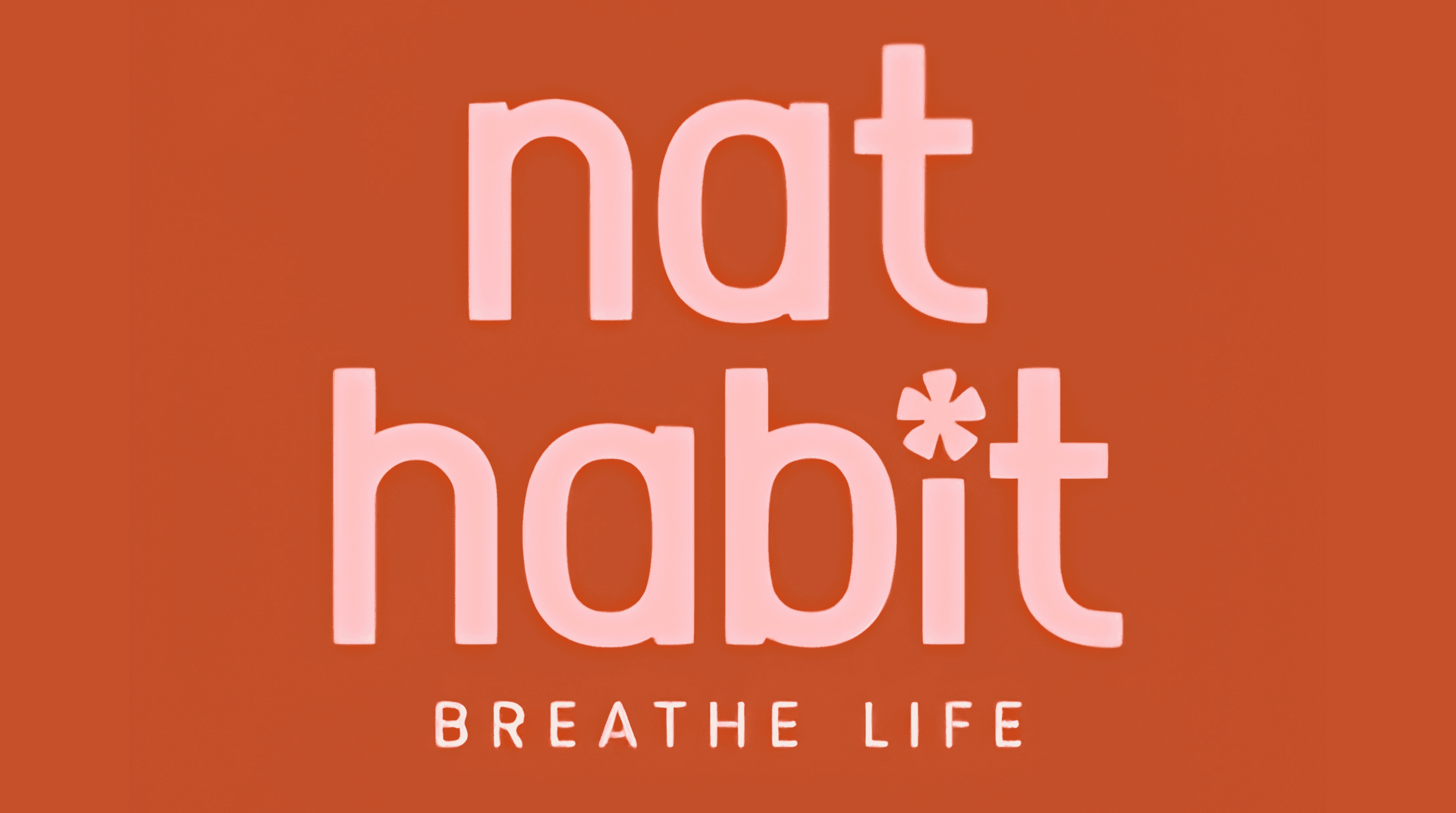
After six years and close to ₹250 crore in revenue, the Gurugram-based Ayurvedic beauty brand dropped its "Fresh Ayurveda" positioning and rebranded entirely under a new philosophy: Breathe Life.
New logo. New colour palette. New packaging. New tagline. A completely new visual language rolling out simultaneously across D2C channels, marketplaces, retail stores, and quick commerce.
This is either a masterclass in brand evolution or a cautionary tale, depending on whether it works. But regardless of the outcome, the decision to rebrand at this stage is worth unpacking carefully. Because the reasons behind it contain some of the most important thinking any scaling D2C brand should be doing.
Why "Fresh Ayurveda" Had Run Its Course
When Nat Habit launched in 2019, "Fresh Ayurveda" was a genuinely differentiating position. The brand made Ayurvedic personal care products prepared daily using whole, natural ingredients, fresh herbs, milk, yogurt, oils, in what they called an "Ayurvedic kitchen." The freshness and the ritual were the whole story.
But six years later, the D2C beauty landscape looked very different. Mamaearth, WOW, Plum, Biotique, Lotus Herbals, Dabur, Himalaya, all competing in the same natural/Ayurvedic territory. "Fresh Ayurveda" as a tagline was no longer differentiating in a market crowded with claims of naturalness.
More importantly, the brand had grown beyond the niche its original identity defined. With 10,000+ stores, international ambitions, and a product range expanding beyond its original positioning, "Fresh Ayurveda" had become a box the brand had outgrown rather than a flag it was planting.
Co-founder Swagatika Das put it simply: "The old gave us roots, the new will give us wings. So we're letting go respectfully, embracing the evolution ahead."
The Strategy Behind the New Identity
"Breathe Life" is a deliberate step up in brand ambition. The shift is from category descriptor to emotional philosophy.
"Fresh Ayurveda" told you what the brand does. "Breathe Life" tells you how the brand wants you to feel.
That's a significant move. Category-based positioning is efficient for early-stage growth, it helps new customers instantly understand what you sell and why it's different from conventional alternatives. But it has a ceiling. Once the category fills up with competitors, being "the natural one" or "the Ayurvedic one" stops working because everyone is the natural, Ayurvedic one.
Emotional philosophy-based positioning, when it's built on something genuine, creates a different kind of stickiness. You're not just buying a product; you're buying into a worldview. "Breathe Life", the idea of vitality, energy, and feeling centred, taps into something much broader and harder to replicate than the ingredients you use.
The visual execution followed the same logic. Nat Habit's refreshed identity includes a chakra-inspired flower logo replacing the earlier calendar icon, a more grounded typeface, and a vibrant palette led by orange to stand out on-shelf in a category dominated by green-brown tones. Specific supporting colours, Hibiscus Pink, Tikta Green, Ubtan Yellow, are tied directly to product benefits, creating a visual system that builds recognition over time rather than just looking on-trend in the launch moment.
What They Got Right About the Timing
The most revealing thing about this rebrand is when it happened: not at launch, and not at some arbitrary milestone, but at the precise point when the brand had genuine scale to back it up.
₹250 crore in revenue and 10,000+ stores means Nat Habit has real distribution, real shelf presence, real brand touchpoints, real customer relationships. That's the foundation you need before you can roll out a new identity at scale without it feeling hollow.
A rebrand at ₹5 crore revenue with 200 stockists is a very different risk than a rebrand at ₹250 crore with 10,000+ stores. At small scale, a rebrand is mostly a website update and a new logo. At real scale, it's a comprehensive rollout across every customer touchpoint, packaging, point-of-sale, digital creative, marketplace listings, creator content, WhatsApp CRM flows, everything simultaneously.
The reason this matters: an inconsistent brand is actively harmful. If your new identity is live on Instagram but your old packaging is still on 5,000 pharmacy shelves, you're creating confusion rather than clarity. The brand had to be big enough, and operationally capable enough, to execute the transition cleanly before the rebrand made sense.
The Three Rebrand Traps Nat Habit Appeared to Avoid
Rebrands fail in predictable ways. Here's what the Nat Habit approach seemed to get right by avoiding each of them:
Trap 1: Rebranding the aesthetic without changing the strategy. A lot of "rebrands" are really just redesigns, new logo, new colours, same positioning. Nat Habit moved the strategic platform from "Fresh Ayurveda" (category claim) to "Breathe Life" (emotional platform). That's a genuine strategic shift, not just a visual refresh.
Trap 2: Abandoning equity without transferring it. The brand didn't try to erase its Ayurvedic roots, it reframed them. "We don't just make beauty more natural. We breathe life into your beauty." The 100% natural core is still the foundation. The new identity doesn't deny what the brand was built on; it elevates it. That's how you carry your existing loyal customers into the new identity rather than leaving them behind.
Trap 3: Announcing rather than earning. The rollout included cryptic Instagram posts that stripped down product packaging and replaced it with handwritten labels before the official reveal, creating mystery, earned media, and consumer engagement before the rebrand dropped. That's how you make a rebrand feel like a cultural moment rather than a press release.
What Every Scaling D2C Brand Should Take From This
Whether Nat Habit's "Breathe Life" eventually proves to be a masterclass or a cautionary tale, and the market will tell that story over the next 2–3 years, the thinking behind the rebrand is sound.
The questions every growing D2C brand should be asking:
Does your current brand identity still fit who you're becoming? Most brands evolve faster than their identity does. The positioning that got you to ₹10 crore might be the ceiling that prevents you from getting to ₹100 crore. At what point does "who we were" start competing with "who we're trying to be"?
Is your positioning differentiating you or just describing you? In a crowded category, a brand that merely describes what it does (natural, organic, sustainable, Ayurvedic) is competing on the same terms as everyone else. A brand built on a genuine emotional philosophy, that its specific customer actually feels, is playing a different game.
Do you have the operational scale to execute a rebrand cleanly? A confused rollout is worse than no rebrand at all. Before you change your identity, be honest about whether you can deliver that identity consistently across every touchpoint your customer encounters.
Have you validated the new identity with your existing community before you commit? Your most loyal customers are both your biggest asset in a rebrand and your biggest vulnerability. Get them involved early, not as an afterthought.
The Indian D2C market is growing fast enough that a well-positioned brand can scale to significant revenue in a few years. But sustainable growth, the kind that leads to acquisitions, IPOs, or category leadership, requires brand thinking that goes beyond the logo and the launch.
Nat Habit just gave the entire industry a masterclass in what that thinking looks like when it's applied at scale.
At Pgeerated, brand strategy and identity work is at the core of what we do, whether you're building from scratch or evolving what already exists. We'd love to understand what your brand is trying to become.
Book your free audit call → https://forms.gle/g8bdErfSj4yVocEu9
We'll map your current funnel, identify your biggest conversion gaps, and give you a clear picture of where to focus first.